

By Nicolas Ritoux
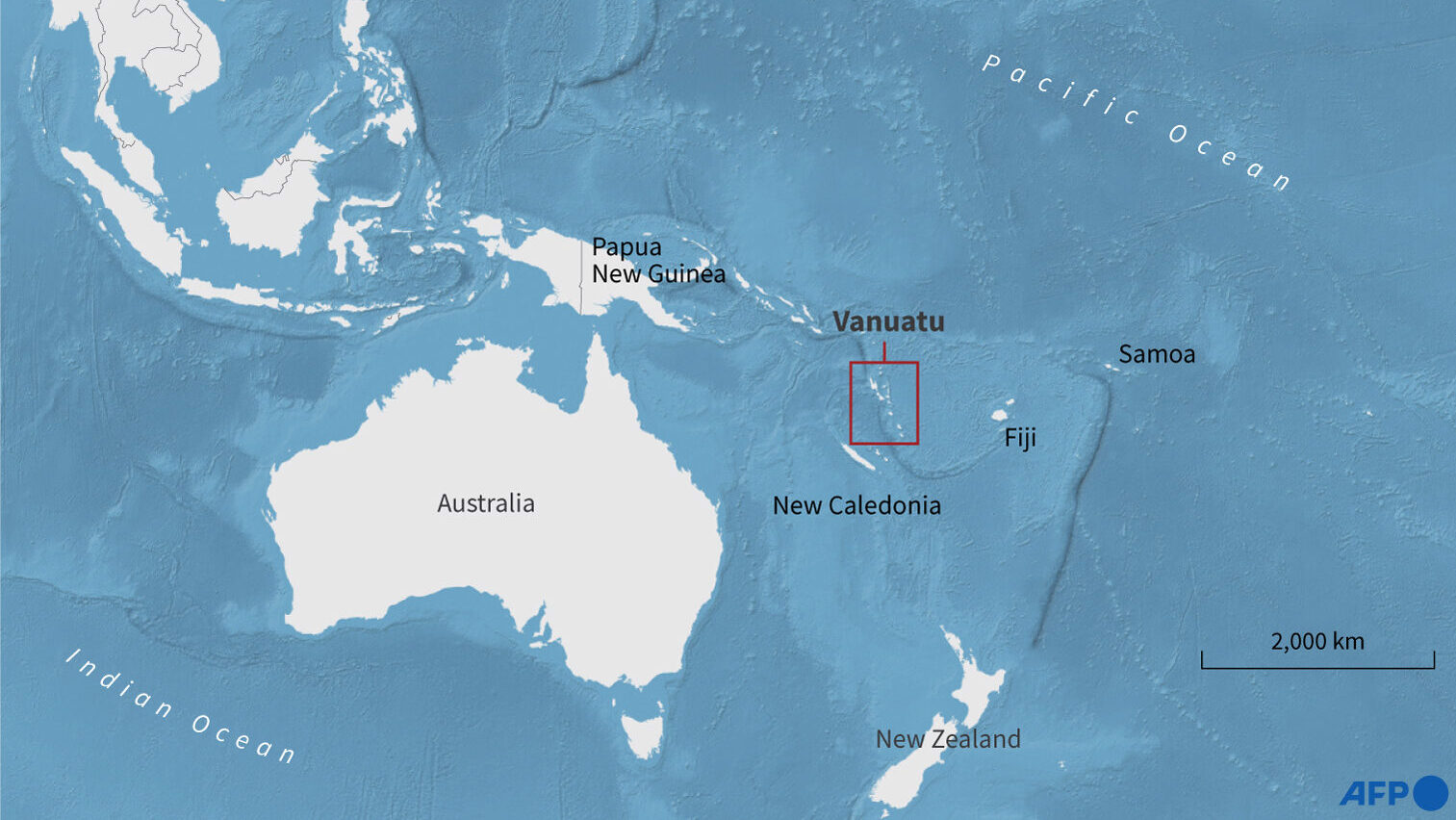
Remote, resource-poor, and sparsely populated, the Pacific island nation of Vanuatu is not known for many achievements, if you’ve heard its name at all. It does, however, hold the distinction of being the most at-risk country for natural disasters, ranking consistently first on the World Risk Index due to its frequent exposure to cyclones and earthquakes—sometimes within days.
In addition to its exceptional bad luck with the gods of nature, Vanuatu has for almost a decade been subjected to a peculiar curse from the would-be arbiters of global governance. It is one of a handful of jurisdictions to have appeared on both EU financial and tax blacklists and, by far, the one that has remained there the longest.
Little known outside corporate compliance circles, the EU maintains two distinct blacklists: one targeting “high-risk” jurisdictions for money laundering and terrorist financing, created in 2016 by the European Commission; and another for “non-cooperation for tax purposes,” maintained since 2017 by the European Council. The former was ostensibly modeled after the ‘grey list’ of the Financial Action Task Force (FATF)—an independent, intergovernmental watchdog established in 1989 by the G7 to set global standards for combating money laundering, terrorist financing, and proliferation financing. The latter draws heavily on OECD transparency and tax governance standards.
There is substantial overlap between the EU lists and their international benchmarks, compounded by the fact that both are run from Brussels as desk-based exercises, while the FATF and the OECD’s work rests on wider membership and on-site assessments. Yet discrepancies do arise—as in the case of Vanuatu. The FATF took it off its grey list in June 2018. The OECD declared it “partially compliant” in 2019. Oddly, the EU did not follow.
With an economy of roughly $1 billion, or 0.001% of global GDP, Vanuatu makes a poor candidate for a financial crime hub or a tax haven, let alone both. Even if every dollar were illicit, it would barely make a dent next to the leading offenders. Several EU countries consistently score highly in global rankings, such as those published by the Tax Justice Network, though, conveniently, they fall outside the scope of EU assessments.
The Brussels double tap
As the people of Vanuatu know all too well, atmospheric and geological disasters are much more damaging when suffered in combination. The same goes for EU blacklists. The dual suspicion of money laundering and tax evasion has weighed heavily on growth, discouraging foreign investment and constraining access to reliable, cost-effective banking relationships.
Even though Vanuatu was cleared years ago by the FATF and OECD, widely recognized as the global standard setters, EU listings are still red flags for Western financial institutions, which tend to default to ‘de-risking’ at the first sign of concern. This became clear in 2020 when Vanuatu lost USD correspondent banking, just as the pandemic shut down tourism, its main source of income, for the next two years.
The banks that remain accessible require heavier documentation and due diligence, making transactions slower and more expensive. The added friction may be manageable for local entrepreneurs; for foreign investors, it’s a non-starter.
Efforts by Vanuatu authorities to comply and seek clarity on EU rules have made little progress. The last publicly known exchanges took place in 2022, involving technical concerns that were subsequently addressed, to no avail.
The only delisting Vanuatu ever got was its removal from visa-free access to the Schengen area over concerns about insufficient vetting of naturalized citizens. On that issue, EU officials swiftly set the machinery in motion, with a temporary Commission decision followed by a Parliament vote and a final Council decision. But on the blacklists front: all quiet.
Strong with the weak, weak with the strong
Whatever genuine ambition Brussels once had to police financial and tax risks has long been extinguished. In 2019, when the Commission introduced its own “high-risk” methodology, it identified ten jurisdictions not listed by the FATF, including Saudi Arabia and four U.S. territories. Diplomatic outrage promptly followed, and “European governments, under pressure from Washington and Riyadh, refused to endorse [the draft list]” (Wall Street Journal).
The Commission’s revised 2020 methodology fell back in line with the FATF framework, and since then, the only departures on the ‘high-risk’ blacklist have been Russia, Turkey, and Vanuatu. Russia was added in a category of its own after its FATF membership was suspended. Turkey, a NATO member and EU candidate, was spared despite being grey-listed by the FATF. Vanuatu, by contrast, remained despite being cleared by the FATF.
The history of the other blacklist, the one for tax improprieties, is even more revealing. For most of its existence, it has contained a sprinkling of small tropical nations in the Pacific and Caribbean, with only brief appearances by larger countries, until Russia was added in 2023. Vanuatu has been listed since 2019, despite receiving an OECD Global Forum rating no worse than that of many jurisdictions that never made the cut.
In neither case was there much justification for targeting Vanuatu. The country appears less as a genuine danger to the European financial system than as a convenient suspect, one that can be singled out at little diplomatic cost. That is the pattern these blacklists reveal: when the EU ventured beyond international standards, it retreated under diplomatic pressure; Vanuatu had no such leverage, and so it remained, serving less as evidence of rigorous oversight than as proof that the process still delivers results.
The hand that strikes, the hand that soothes
European taxpayers might reasonably ask what any of this achieves. So far, the blacklists have not meaningfully constrained the countries responsible for the bulk of financial secrecy or tax evasion and have served no demonstrable purpose beyond their own perpetuation. What remains is a largely empty process and convenient scapegoats to show for it, with Vanuatu the most striking example.
To this day, most of its 330,000 citizens still lack access to electricity, sanitation, or even proper roads outside the capital, Port Vila. What little room there is for development between episodes of disaster recovery is spent fighting off accusations that no one has been required to substantiate. Meanwhile, EU development aid keeps flowing so that one arm of Brussels undermines the country’s prospects while another spends taxpayer money trying to repair the damage.
Another FATF assessment of Vanuatu is due in November. Whether the EU follows suit will say less about Vanuatu’s compliance than about Brussels’ willingness to let evidence interfere with convenience.
—
Nicolas Ritoux is a communications advisor and former journalist based in Vietnam. He writes on global markets and financial regulation.